BIG NEWS: Homestead is a 2026 BBB Torch Awards for Ethics Finalist.
READ THE STORY →

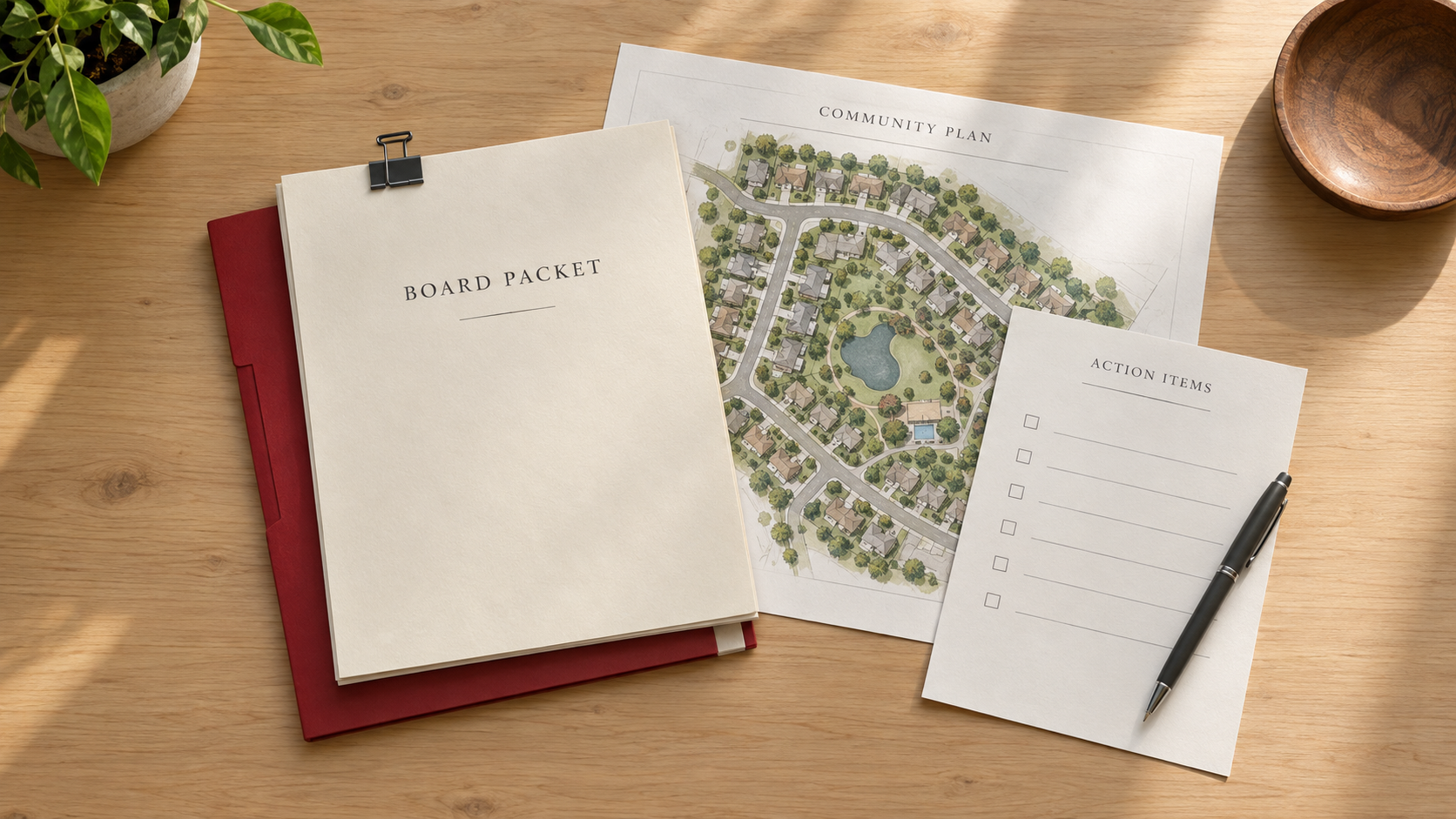
An HOA board reviews the community’s business, makes decisions within its authority, and supplies feedback on priorities and results. In Homestead’s full-service approach, that work should happen primarily at scheduled board meetings: management prepares the information, presents recommendations, and carries out the board’s decisions afterward. In almost all circumstances, board members should be able to attend the meeting, review, vote, and return to their lives. Management owns the work that makes that possible.
An HOA board reviews the community’s business, makes decisions within its authority, and supplies feedback on priorities and results. In Homestead’s full-service approach, that work should happen primarily at scheduled board meetings: management prepares the information, presents recommendations, and carries out the board’s decisions afterward. In almost all circumstances, board members should be able to attend the meeting, review, vote, and return to their lives. Management owns the work that makes that possible.
You volunteered because you care about your community. Homestead’s approach is built around making that commitment manageable.
At a board meeting, you should receive a clear picture of the association’s business: what has happened, what needs a decision, what management recommends, and what comes next. You ask questions, review the options, vote, and supply feedback.
When the meeting ends, management takes the work forward.
The landscaping proposal does not become the President’s project to coordinate. An approved repair does not become the Treasurer’s assignment to schedule. A homeowner concern does not become a director’s responsibility to investigate and resolve.
Management does the work. The board reviews, votes, and supplies feedback.
A manageable board role starts well before the meeting.
Management identifies upcoming needs, tracks deadlines, gathers information, obtains proposals, coordinates professional input, and develops recommendations. It organizes the agenda and meeting materials so the board can understand the issues and make informed decisions.
A repair item should arrive with enough information to explain the problem, the proposed response, the cost, and the decision needed. A budget discussion should arrive with a prepared proposal and an explanation of the important choices. A contract renewal should reach the board before expiration becomes an avoidable emergency.
Directors should receive matters ready for meaningful review. They should not have to assemble the background, chase missing proposals, or discover what question management needs answered.
Good preparation gives the board a useful meeting and gives management clear direction for the work afterward.
The board’s contribution matters. Directors bring the community’s perspective, question recommendations, consider tradeoffs, vote on matters within their authority, and tell management whether the results meet expectations.
Management should make that participation straightforward by explaining:
Some agenda items are updates. Others need a vote. Management should make the distinction clear so directors can focus their attention where it is useful.
The board’s oversight happens through meaningful review and informed decisions. Management supplies the organized information that supports both.
After the meeting, management records the decisions, organizes the next steps, and carries out the authorized work.
That includes coordinating vendors, scheduling services, handling homeowner communication, administering financial processes, tracking requests, maintaining records, and pursuing outstanding items. When another professional is needed, management organizes that involvement and follows through on the resulting work.
A contractor who has not responded remains management’s follow-up responsibility. A missing document remains management’s task to obtain. An unresolved request stays in management’s process until it is resolved or brought forward with a specific decision needed.
Directors should not have to monitor an action list throughout the week to keep the association moving. Management maintains that list and brings useful progress reporting to the next meeting.
An informational update should also be recognizable as information. Receiving an update should not quietly turn into an assignment to respond, investigate, or take over.
Most ordinary association business can be planned for the regular meeting schedule.
Management should look ahead at renewals, maintenance needs, project timing, budgets, and other foreseeable decisions. Items requiring board approval should be prepared and scheduled early enough for the board to consider them at a meeting.
Work already authorized continues between meetings. Future decisions are organized for the next appropriate agenda. Actual emergencies receive prompt attention.
This is how management protects both the community’s progress and the volunteers’ time.
A steady stream of “quick email votes” should not become the normal way to run the association. Homestead’s operating expectation is that a properly managed community should rarely need one—perhaps once or twice in a year when circumstances warrant it, rather than every week or month.
That is a service standard, not a guaranteed annual count. Whether a particular decision may be made outside a meeting depends on the applicable requirements; management should confirm the appropriate process before arranging it.
Management may occasionally ask board members to walk a completed or substantial project and provide feedback on whether the result meets the community’s expectations.
Management arranges the walkthrough, explains what feedback is needed, records any concerns, and follows up with the contractor or appropriate professional.
The board provides its perspective and satisfaction feedback. Management continues to own project coordination and follow-through. Technical inspection or professional acceptance remains with the appropriately qualified people.
When an emergency needs board-level attention between meetings, the Community Manager may contact the President.
Management should explain what happened, what response is underway, what recommendation it has, and what specific input or authorized decision is needed. The President should not have to discover the emergency, assemble the facts, or coordinate the response independently.
Any action follows the association’s established authority and emergency procedures. If broader board involvement is necessary, management organizes the appropriate next step.
Occasionally, a decision cannot reasonably wait until the next meeting. Management should explain why, provide the information and recommendation, and arrange the appropriate decision process.
These situations should remain exceptions. If ordinary business repeatedly becomes urgent between meetings, management should examine its planning, preparation, and use of existing authority.
Consider an illustrative landscaping project.
Before the meeting, management develops the scope, obtains comparable proposals, and prepares a recommendation. At the meeting, the board reviews the information, asks questions, votes on the proposal, and supplies feedback on the desired result.
Afterward, management coordinates the contractor, scheduling, homeowner notices, and follow-up. Routine issues are handled within the approved scope and authority. Progress returns through management’s reporting.
If the project warrants a board walkthrough, management arranges it and handles the resulting follow-up.
The board has provided direction and evaluated the result. Management has owned the work from preparation through completion.
Ask management:
“What can you prepare, handle, or schedule differently so our board can make its decisions at meetings and leave the follow-through with you?”
Management should bring back the proposed changes and carry them out once approved where needed. The answer should make board service easier to sustain.
That is what Homestead means by a white-glove approach: thoughtful preparation, useful meetings, professional follow-through, and respect for the life each volunteer has outside the association.
Under Homestead’s full-service approach, routine operations belong with management. Board participation should be concentrated at scheduled meetings, with occasional, specific involvement such as a major-project walkthrough or a manager-initiated emergency contact.
The President may be a designated contact, but that should not become a daily approval job. Management should handle authorized operations and bring ordinary board decisions to scheduled meetings. A genuine emergency may call for direct contact from the Community Manager.
Management should handle matters within existing authority and established processes. When a board decision is needed, management prepares the issue for the appropriate meeting or, exceptionally, a suitable process for a time-sensitive decision.
This article describes Homestead’s full-service operating approach. Actual services and decision authority follow the management agreement, governing documents, and applicable law.
Explore more board education in Homestead’s HOA Board Academy.